
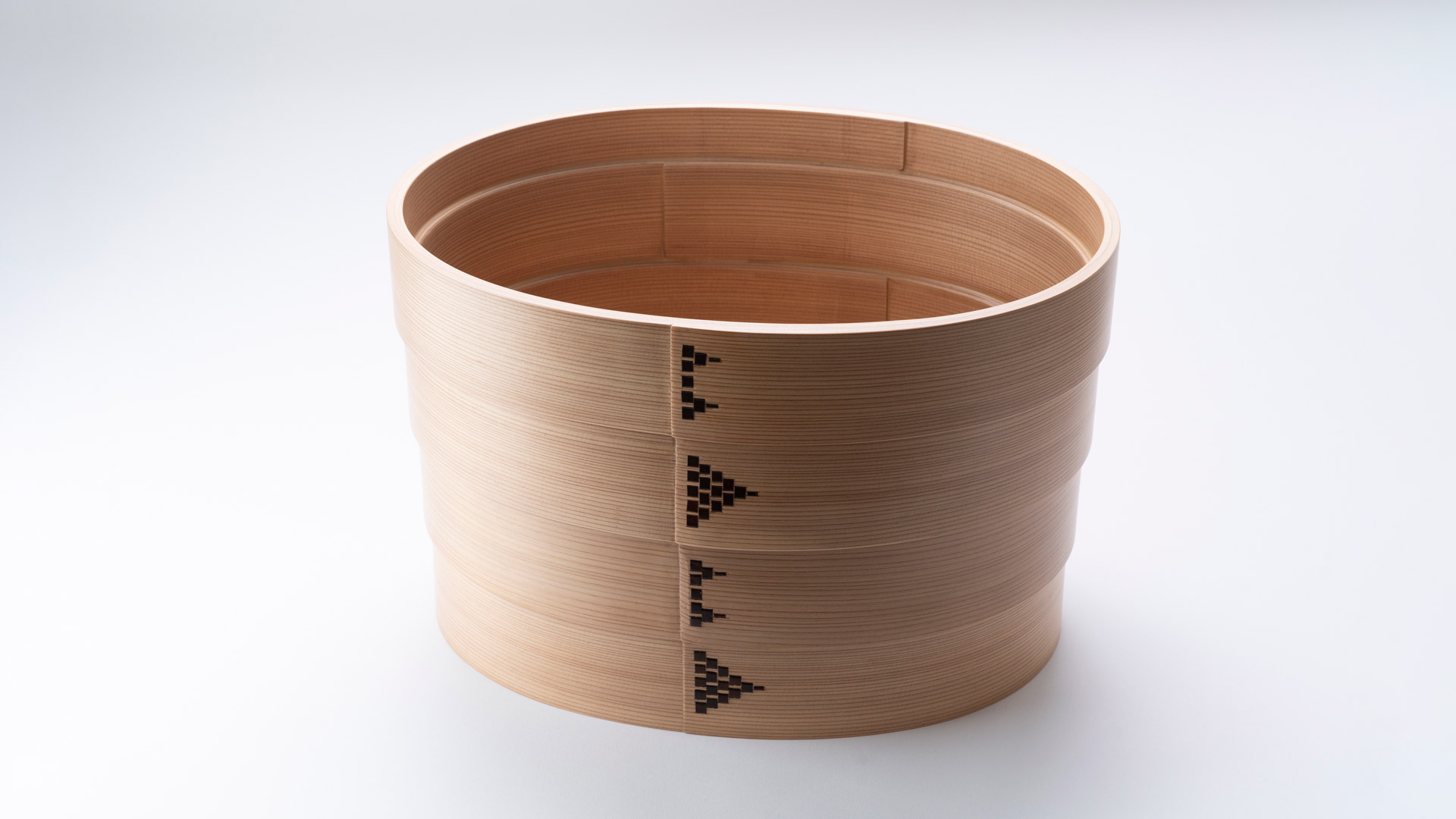
博多曲物
ワインクーラー
WINE COOLER
400年の技が息づく、手仕事の美
Four centuries of craftsmanship, shaped by hand.
博多曲物が生んだ、ワインクーラー
A Wine Cooler Born from Centuries of Craft
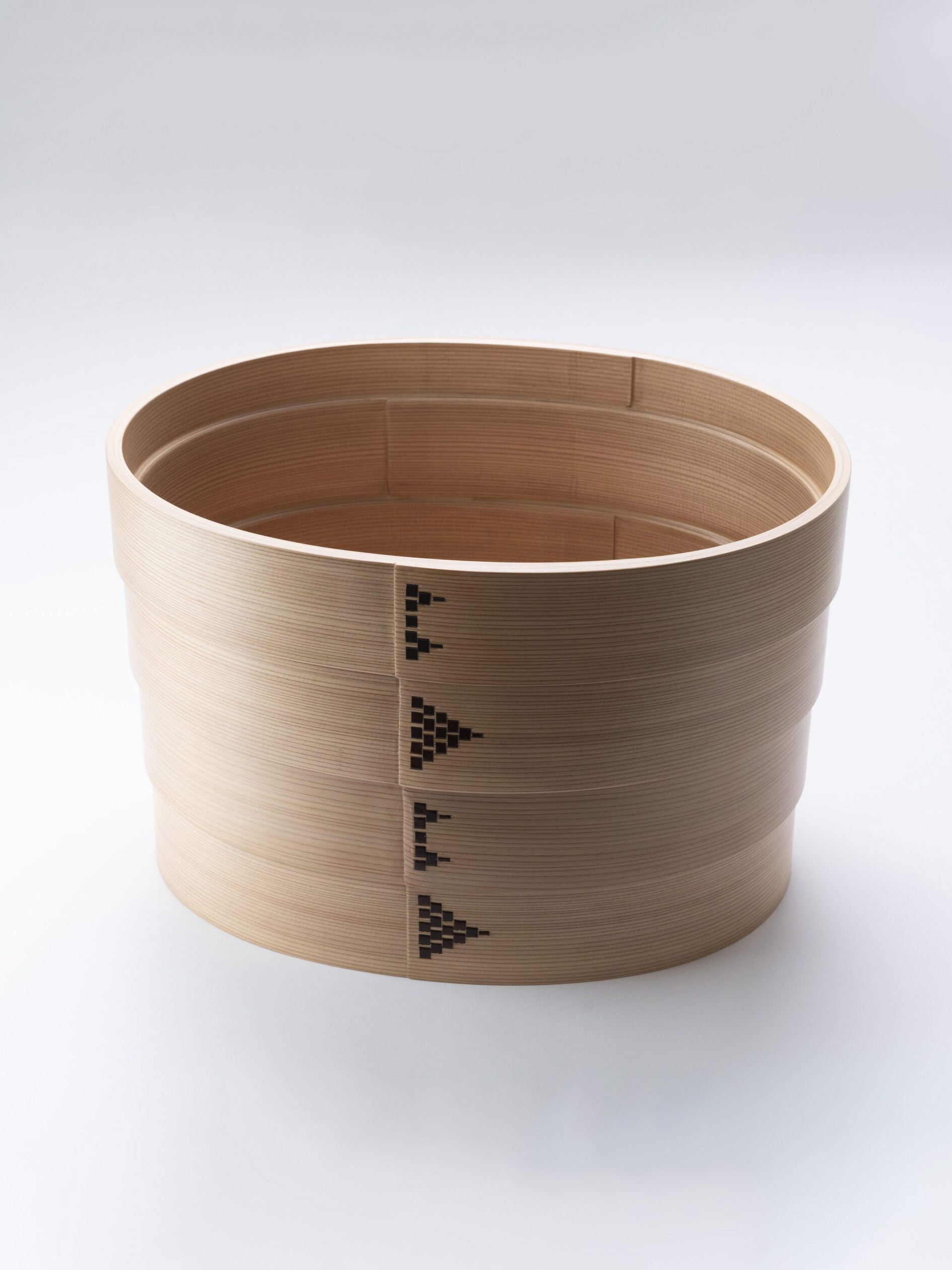


杉・ヒノキの薄板を熱湯で柔らかくし、山桜の皮で綴じて形成する「博多曲物(はかたまげもの)」の技法で生まれたワインクーラーです。金属を一切使わず、職人の手だけで生み出されるこの器は、天然木ならではの断熱性でワインを適温に保ちます。
日本古来より人々の暮らしに寄り添ってきた曲物の技が、現代のワインという文化と融合した、新しい日本の手仕事です。素材の温もりと、わずかな木の呼吸が、ワインに静かな時間を与えます。
使うほどに色が変化し、年月とともに深まる風合いは、工業製品では決して得られない本物の味わいです。大切に扱えば50年以上使い続けることができ、世代を超えて受け継ぐことのできる一点物です。
Crafted from cedar and cypress wood strips softened in hot water, then laced together with cherry bark — this wine cooler is made entirely by hand, without a single piece of metal. The natural insulating properties of the wood keep wine at the ideal temperature.
An ancient Japanese craft meets the contemporary world of wine. The warmth of natural wood and the quiet breath of the grain create an unhurried moment around every bottle.
Each piece develops a rich patina over the years, acquiring a beauty that no factory can replicate. With care, it lasts 50 years or more — a piece that can be passed down through generations.
博多曲物とは
What is Hakata Magemono?
博多曲物は、福岡・博多が発祥の伝統工芸品です。「曲物」の「マゲ」は「曲がった」または「湾曲した」を意味し、薄い帯状の木材を熱し、曲げて固定するその構造を指します。さまざまな形や種類がありますが、曲物は特に日本料理に適しており、構造上、炊き上がったご飯の余分な水分を吸収するのに役立つことから、寿司屋でもよく使われます。
曲物の歴史は何世紀も前に遡り、福岡の博多の地がその発祥の地とされています。元々は筥崎宮の神様への供物入れとして使われていましたが、やがて電車での移動が一般的になり、持ち運びに便利な弁当箱の需要が高まると、日常的に使われるようになりました。
博多曲物の生産が進むにつれて、その技術と工芸は食品盆や茶粉入れなど、さまざまなものに応用されるようになりました。やがて特に博多では、曲物は芸術作品のキャンバスとなり、日本の伝統的なモチーフの華やかなイメージで飾られるようになりました。
手入れが行き届いた上質な曲物は、50年も使い続けることができます。徐々に色が変化し、年月の経過を反映した独特の風合いが出てくる——それが本物の道具が持つ、生きた美しさです。
Hakata Magemono is a traditional bentwood craft originating in Hakata, Fukuoka. "Mage" means "bent" or "curved," referring to the construction in which thin strip veneers of wood are heated, bent, then fastened together. Despite their utilitarian purpose, magemono have sacred origins — originally serving as vessels for offerings to the gods of Hakozaki Shrine.
As the craft developed, the same techniques were applied to food trays, tea powder containers, and eventually canvases for hand-painted imagery of traditional Japanese motifs. Well cared for, high-quality magemono can be used for up to 50 years — growing more beautiful with age.
Years of Unbroken Heritage in Hakata, Fukuoka
十八代目
柴田 玉樹
Tamaki Shibata — 18th Generation Master Artisan
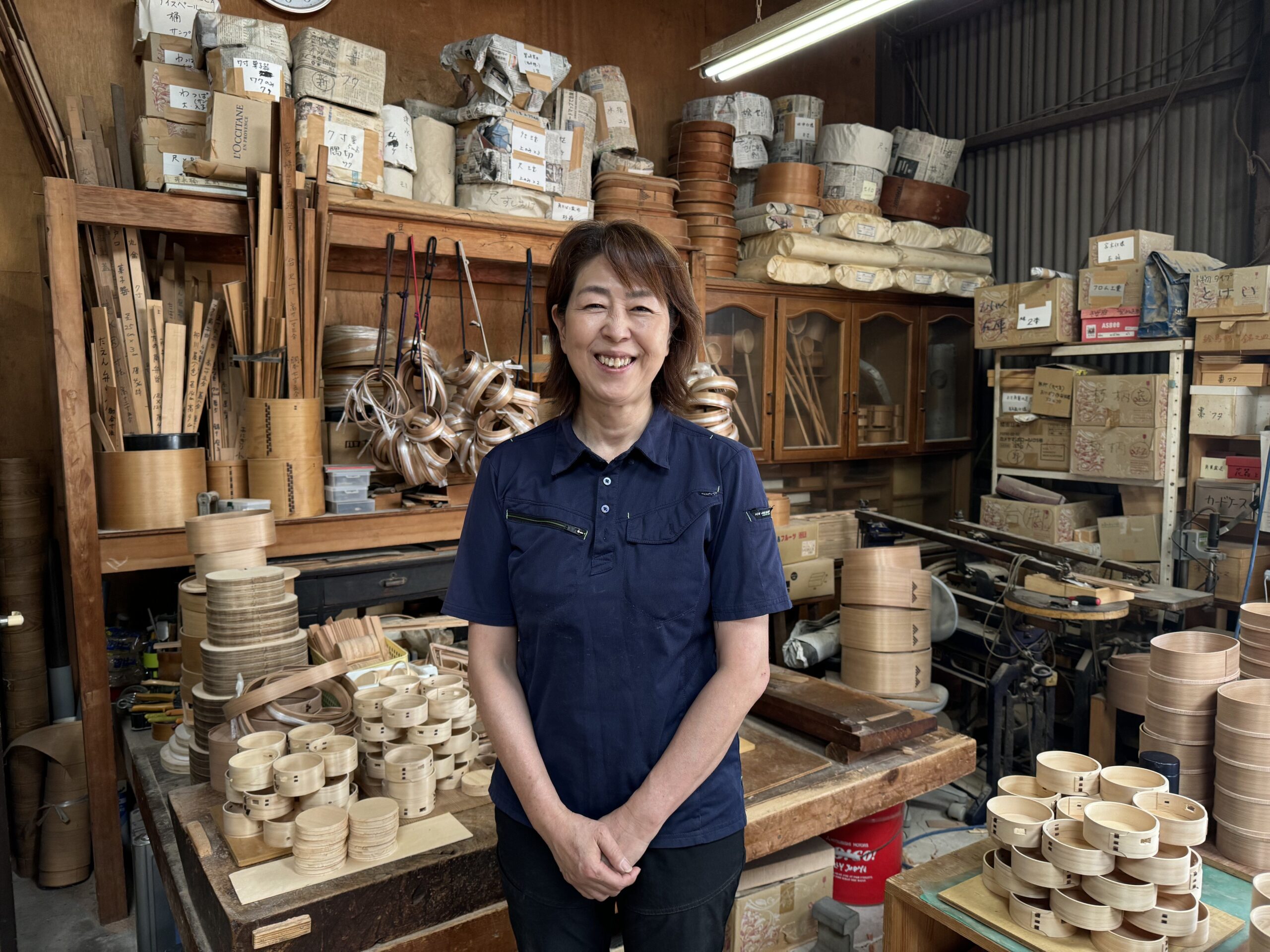
柴田家は400年以上にわたって博多で曲物を作り続けてきた。玉樹さんはその十八代目として、姉妹とともに伝統の技を守る。その制作は、すべて手作業——控えめでありながらも、厳格な姿勢で行われる。
工房内では、加工前の素材の木材と完成された新品の曲物が並置されており、その対比がこの工芸品の要求する敬意を静かに物語る。棚には様々な商品が高く積み上げられ、中には手描きの絵で飾られた一点物も混じっている。
曲物の技術は昔から博多の伝統工芸の定番だが、柴田家はその分野において異端的な存在でもある。年々後継者となる世代が減少し、現在ではその技を受け継ごうとする者はほとんどいない。それに応えるかのように、玉樹さんと家族は現代社会に適応した製品——時計、スマートフォンケース、USB電源の加湿器など——を生み出しながら、400年の技を未来へとつなごうとしている。
ひとつの曲物が完成するまでに、約2週間を要する。その時間の重みが、手に取ったときの静かな確かさとして伝わってくる。
The Shibata family has been producing magemono in Hakata for generations, with Tamaki and her sisters being the 18th in their family line to carry on the storied craft. Their process remains traditional — everything done fully by hand, modest yet rigorous in nature.
While magemono techniques are long-time staples of Hakata, the Shibata family stand as outliers — the number of practicing artisans dwindling each year. In response, Tamaki and her family have adapted their work for the modern world. Each handmade piece takes about two weeks to complete. That weight of time is what you feel when you hold one in your hands.
職人の手から生まれる5つの工程
Five Steps, Crafted by Hand
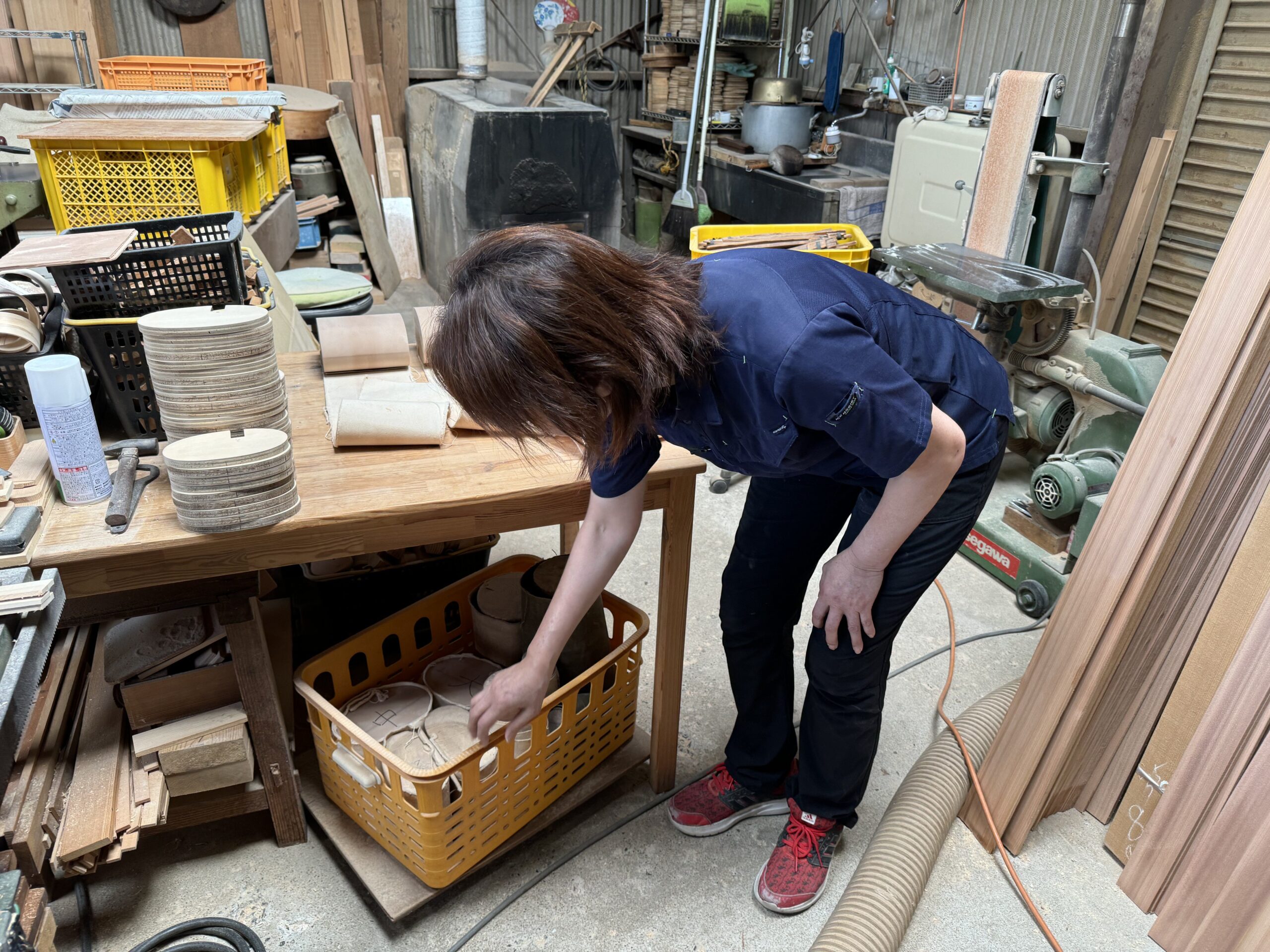
素材の準備
Material Preparation
国産の杉またはヒノキの薄板を、職人が丁寧に選別します。まず外皮を丁寧に剥ぎ、加工しやすい大きさに切り出します。木目の状態、厚み、しなやかさ——長年の経験だけが知る選び方があります。素材との対話が、ここから始まります。
Domestic cedar or cypress strips are carefully selected, then stripped of their exterior bark and cut to workable sizes. Grain, thickness, pliability — only years of experience can judge what the wood needs to become. The conversation between artisan and material begins here.
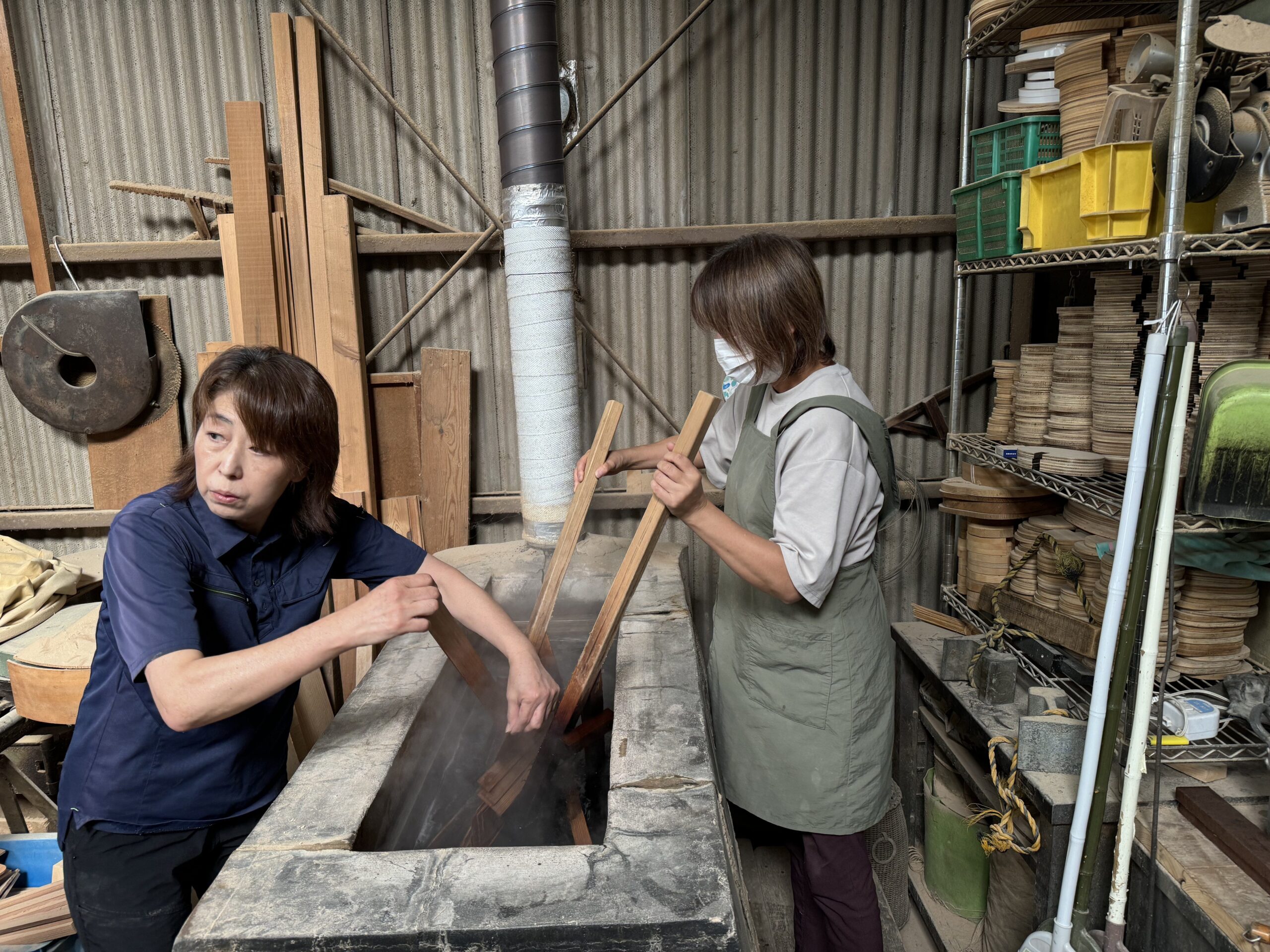
湯通し
Hot Water Soaking
木材を熱湯に浸し、柔らかく、しなやかにします。蒸気が立つ中、職人の手が木の状態を確かめながら進めます。割れることなく曲げられるようになるまで、木の素性に合わせた時間をかけます。急ぐことのできない工程です。
Wood strips are soaked in near-boiling water until pliable enough to bend without splitting. The artisan tests the wood by touch throughout. This step cannot be rushed — and that unhurried attentiveness lays the foundation for every graceful curve.
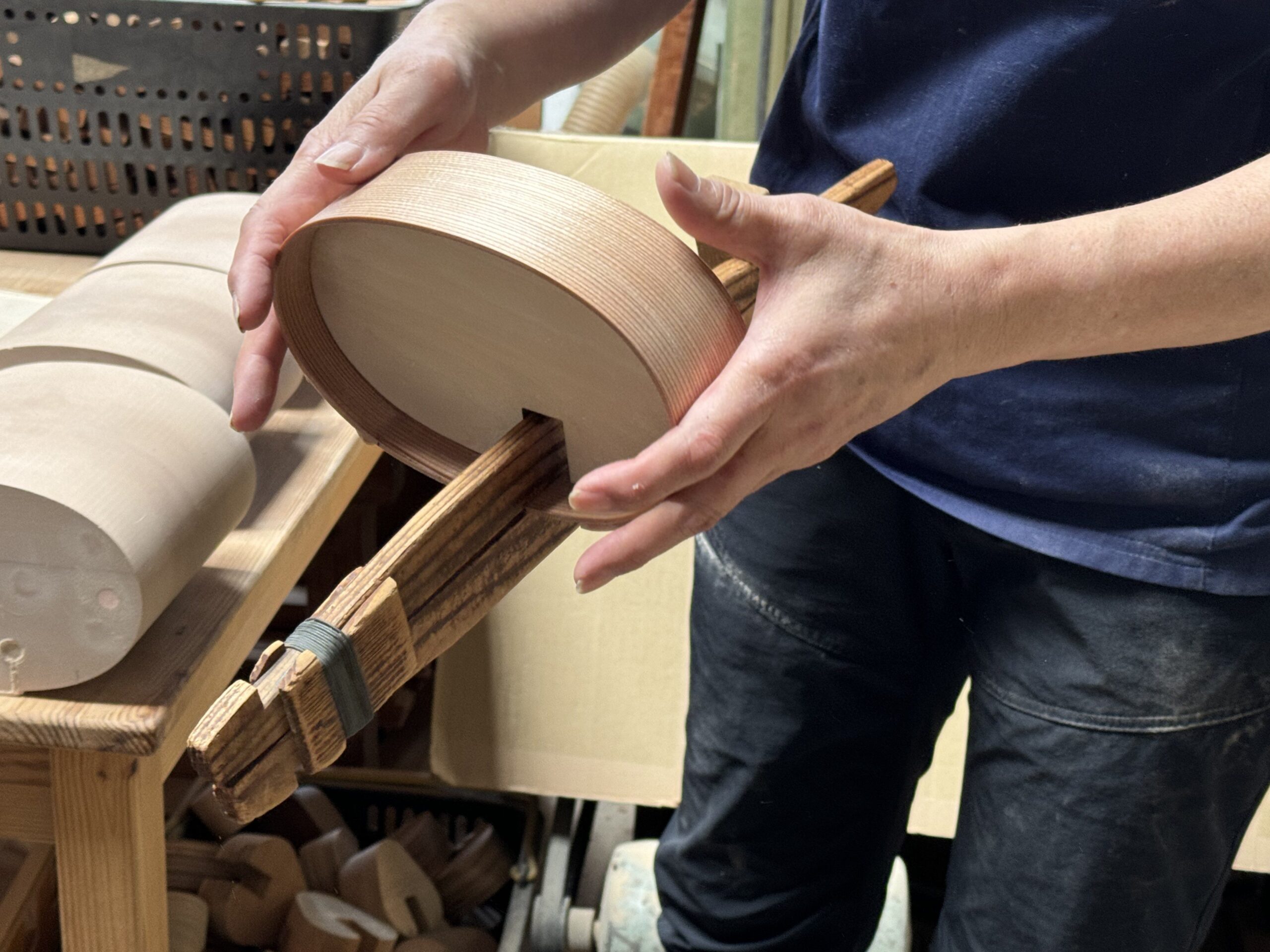
成形・曲げ
Shaping & Bending
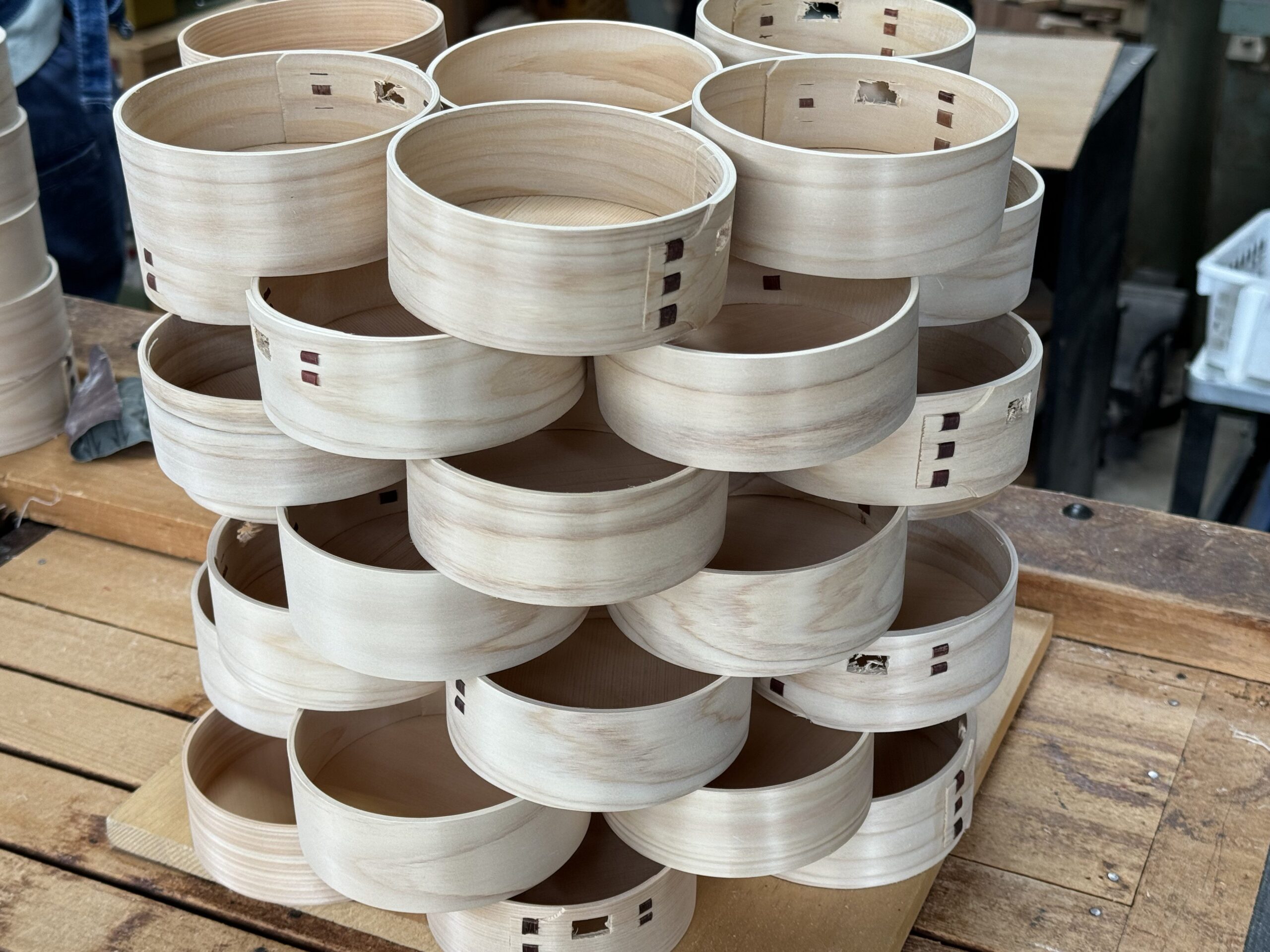
やわらかくなった木材をローラーに乗せ、円筒形の型に沿って曲げていきます。この形がワインクーラーの胴体となります。力と繊細さが同時に求められる、制作の核心です。型から外した瞬間、わずかに異なる個性が宿る——それが手仕事の証です。
The softened strip is set on a rolling wheel and bent around a cylindrical mold into shape. A step demanding both strength and delicacy. The moment the wood leaves the mold, a subtle individuality is born. That is the mark of the hand.
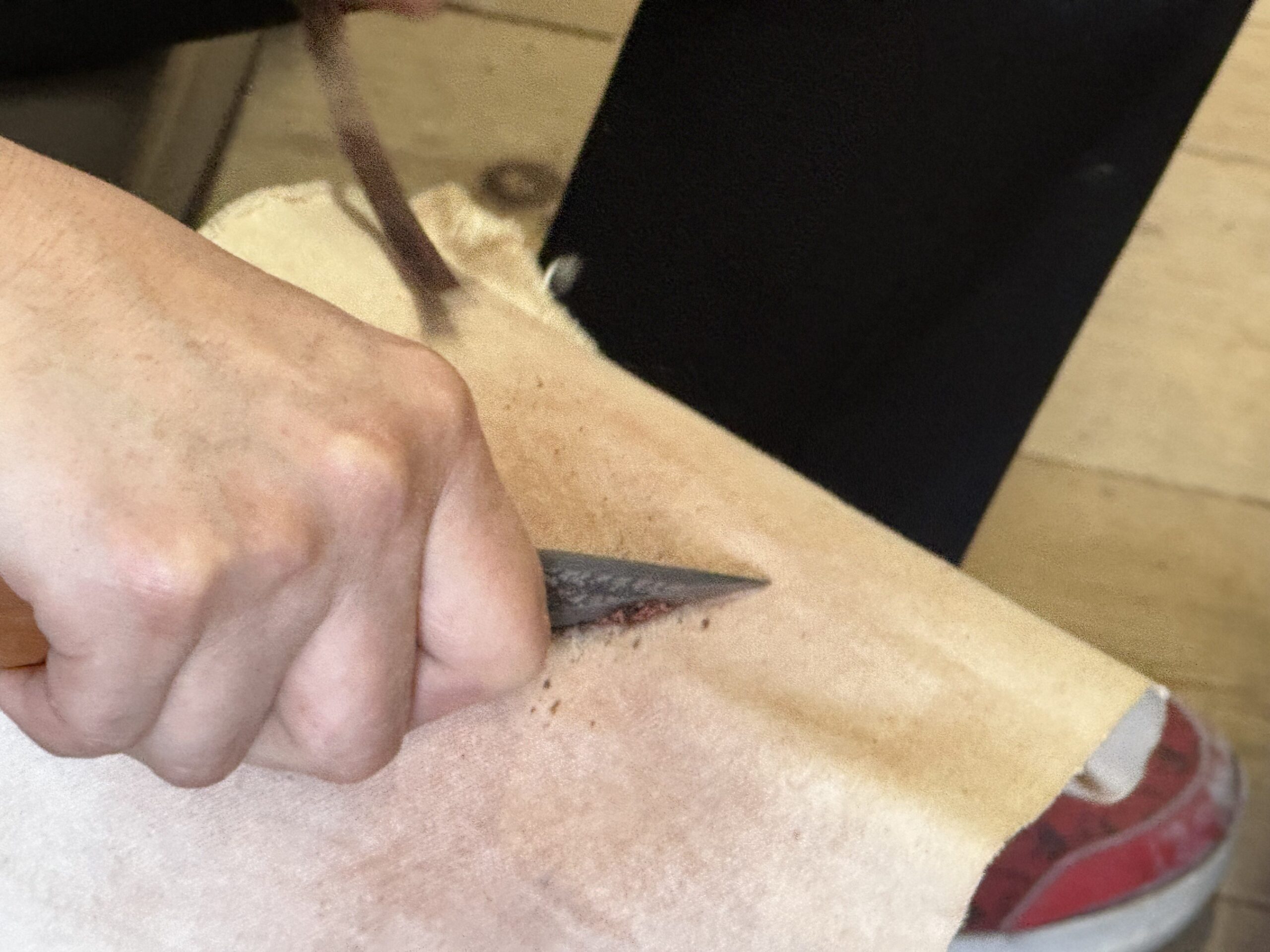
桜皮の綴じ
Cherry Bark Lacing
山桜の樹皮を細く切り、胴体の継ぎ目を縫い綴じます。金属を一切使わないのが博多曲物の特徴です。桜皮の強靭さと美しさが、この器を400年間支えてきました。ひと針ひと針、手の感覚だけを頼りに進めていくこの作業が、見えないところに宿る誠実さです。
Strips of wild cherry bark are cut thin and woven through the seam — without a single piece of metal. The tenacity and beauty of cherry bark have held these vessels together for 400 years. Each stitch placed by feel alone. An honesty that lives where the eye cannot reach.
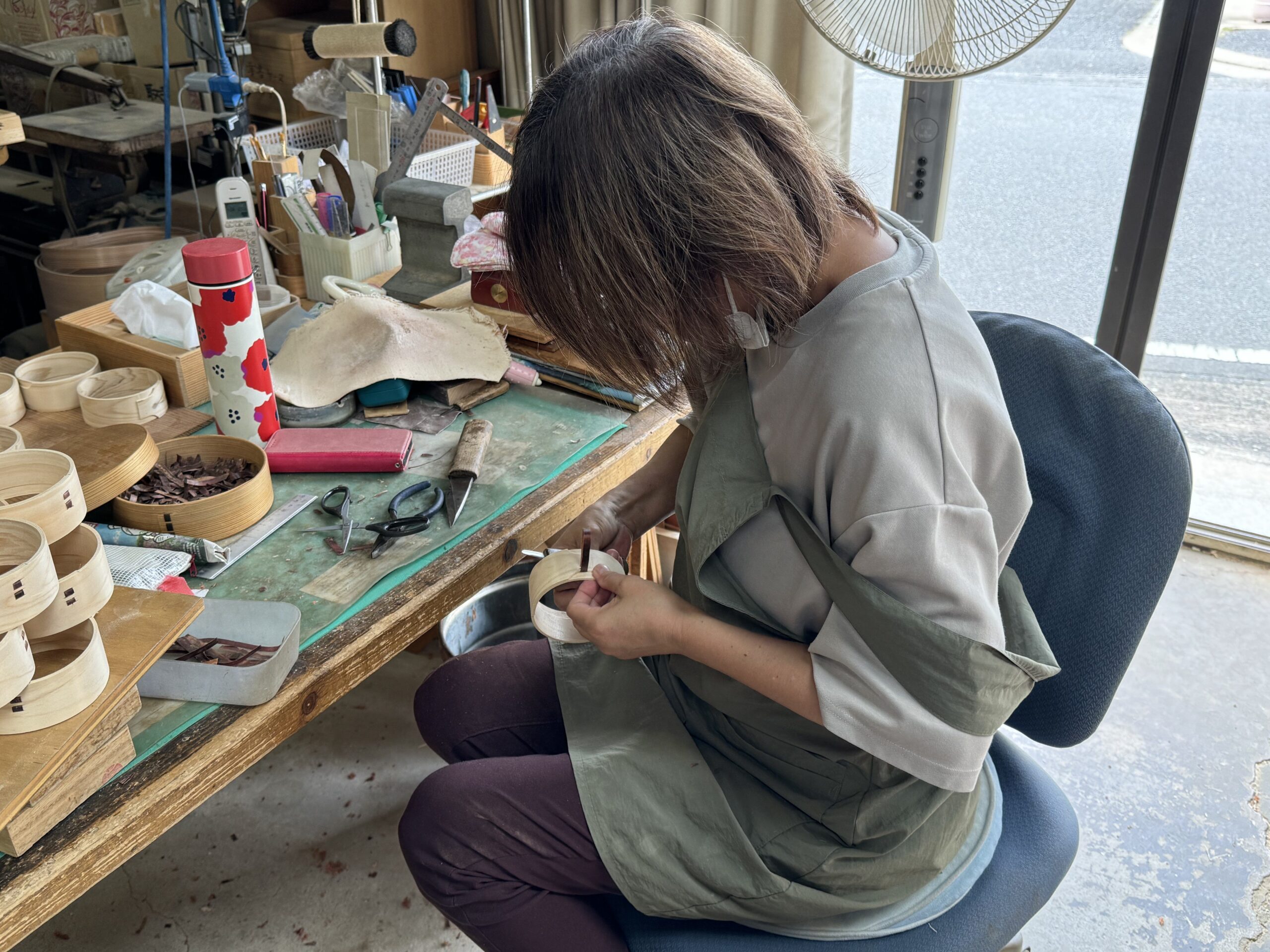
仕上げ
Finishing
表面を整え、細部を丁寧に仕上げます。工房の棚には、完成を待つ曲物が静かに並ぶ。素材のままの木の板と、完成された器が隣り合う光景が、この工芸品の持つ敬意の重さを静かに語っています。完成までに要する時間は、約2週間。手の温もりが宿った一点が、ようやく世に出ます。
The surface is refined and finished by hand. In the workshop, completed pieces stand quietly beside raw wood — a juxtaposition that speaks to the respect this craft demands. From start to finish: approximately two weeks, by hand. Only then does a vessel bearing the artisan's warmth enter the world.
仕様・素材
Materials & Specifications
| 素材Materials | 杉・ヒノキ(胴体)、山桜皮(綴じ)Cedar / Cypress body, Wild Cherry bark lacing |
|---|---|
| サイズDimensions | W ___mm × H ___mm(詳細準備中)To be confirmed |
| 重量Weight | ___g(詳細準備中)To be confirmed |
| 製作者Crafted by | 十八代目 柴田 玉樹Tamaki Shibata, 18th Generation |
| 制作地Origin | 福岡県粕屋郡志免町(日本)Shime-machi, Fukuoka, Japan |
| お手入れCare | 柔らかい布で拭く。食洗機・長時間の水浸け不可Wipe with a soft cloth. Not dishwasher safe. |
ご購入・お問い合わせ
Purchase & Contact
※ ECサイトのURLは準備中です。